|
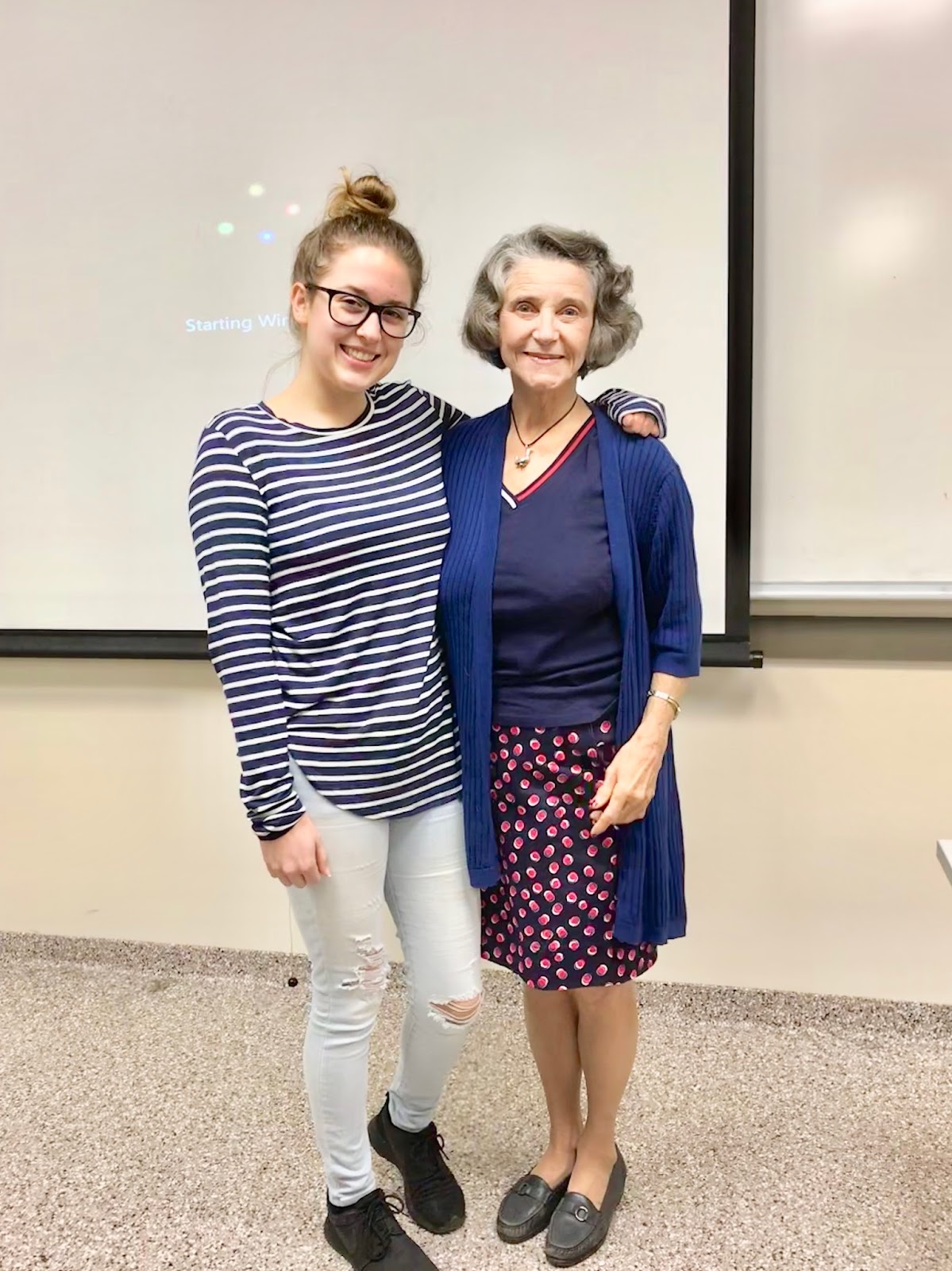
| Sue Bennett giving us background history of Bethel United Methodist Church. |
Bennett is a Charleston tour guide and she has her own website that you can find here! She knows a lot about Charleston history and loves sharing it with people! She also works at Bethel United Methodist Church as an administrator and gave us a tour of her own workplace!
Bennett shared with us, "This is in the 1850s, church members may own enslaved people, church pastors may not." I thought this was interesting because I figured that everyone could own slaves during this time.
She follows up her statement with, "What happens when a pastor's wife dies, he marries a lady who is a widow, who owns two enslaved people? She becomes his property as well as the enslaved people... Therefore with that and many other things going on, Bethel Methodist Episcopal Church becomes Methodist Church South." This is the church we went to February 19!
 |
| Inside of the church and our view from the balcony. Suchan amazing view! |
As we continued our tour, Bennett took us inside of the church and it was astonishing! The church is very different from our modern churches, so anyone could tell that it has history behind it. Bennet tells us, "[The church] would look very similar to what you see now, [from back then]."
After we took our tour, our class was to take pictures of some grave markers and identify the symbolism and what type of grave marker of each one. There were many to choose from, but we chose 10 of them to use for our blog posts.
 |
| This particular grave marker was William H. Fleming D.D, a pastor at the church in 1870. |
This grave marker is considered a cradle because of the small walls outlining the grave. On the top part, there is a Bible on top of a podium and this usually symbolizes a person's good deeds. It also can symbolize that this person was very religious.
In this case, the man buried here was very religious because he was the pastor of the church. He died of gangrene lungs on April 16, 1877. He was born in Charleston county and died in Charleston county, being the minister of this church for 36 years in total.
 |
| This is one of the headstones laid on the wall because of the earthquake that happened in 1886. |
The woman who lies here is Priscilla Sarah Eason, born on June 28, 1809, died March 10, 1885. This type of grave marker is a headstone. The crown on the cross represents victory and Christianity.
 |
| Another headstone laid on the wall with beautiful symbolism. |
This dove represents a messenger of God, as well as peace. This woman, Elizabeth M. Ainger, was born on October 14, 1807, and died October 6, 1872. This headstone shows that she was a mother and the symbolism was meant to show that she is laying at rest, in peace.
 |
| Elizabeth M. who aged to be 65 years old and she died in her sleep. |
 |
| A close up to be able to see the detail of the angel and all of the symbolism. |
Here is a headstone with an angel with her hand on her heart. This symbolizes a guide to heaven. This type of grave marker is a headstone that was possibly standing at one point and now it lies like a ledger. There is so much more symbolism shown on this grave marker.
 |
| James F.M. Lord, who died on February 16, 1862. He died at the age of 37. |
This is another headstone with a weeping willow. The weeping willow symbolizes sadness and mourning. Even the name of the tree represents sadness. This is a beautiful, heart touching grave marker found at the church.
 |
| This very small headstone is one of the grave markers that was saved due to the pave over of the parking lot, along with many other ones. |
The finger pointing up on this headstone represents the hope of heaven. Even though it is very small, it shows a lot of symbolism. Casey Poyas's headstone was placed against the wall, but it was placed as close to the grave as possible, as Bennett told us.
 |
| The font of the words are hand carved and look more fancy than other grave markers. This is another way to see that an England carver made this. |
This particular headstone was carved by someone in England. These designs are usually done by the carvers in England. We were told this from Ruth Miller in our past class on February 12.
The angel head with the wings beside it represents emerging triumphant from death. It is also known as the Death's Head.
 |
| Capt. Joseph Hunt is buried here and died January 12, 1822 at the age of 45. |
There are multiple types of symbolism on this headstone, but the urn is the base of the tree and it represents mourning. As before, the weeping willow represents sadness. These two together make the symbolism more powerful and meaningful
 |
| Charles C. Seyle, born July 12, 1823, died February 10, 1880. |
The thorns around the cross represent the suffering of Christ for our sins. This is a headstone that cracked and was probably standing at one point, but is laid down due to natural disaster.
 |
| Eva Lee, died on September 17, 1893, died at the age of 26. |
This die on base has a beautiful flower plant with a broken stem on the bottom right. The broken stem represents that someone has died at a young age. This woman died at a very young age, 26.
 |
| Rosa Mary, born October 9, 1835, died November 2, 1881. |
This drapery cloth symbolizes mourning and sorrow. The type of grave marker is a die in socket. There is also an arrangement of flowers on the grave marker and this represents love and grief.
There is a quote at the bottom that reads, "A brighter home than ours, in heaven, is now thine own." This is so beautiful and thoughtful for the woman who is laid here.
This visit was very interesting and we learned so much about the church, thanks to Sue Bennett! For any other details on the Bethel United Methodist Church graveyard click here!
Works cited:
Santore, Beth. “Gravestone Symbolism.” Gravestone Symbolism, www.graveaddiction.com/symbol.html.
Neighbors, Joy. “A Grave Interest.” Blogspot, 9 Sept. 2011, agraveinterest.blogspot.com/2011/09/symbols-flowers-and-frailty-of-life.html.